

Have you ever thought about how inventors keep their new ideas safe? The fight between utility patent vs design patent is key to protecting ideas in today’s fast world.
Patents are important tools for inventors. They help keep unique ideas and designs safe. Knowing the difference between utility and design patents is very important.
Patent types explained show two ways to protect inventions. Utility patents cover how things work, while design patents protect how they look. This big difference helps inventors protect their ideas and compete worldwide.
Table of Contents
Key Takeaways
- Utility patents protect functional inventions and processes
- Design patents safeguard visual and ornamental features
- Application processes differ significantly between patent types
- Utility patents require more complex documentation
- Design patents offer faster examination and approval
- Patent protection strategies vary based on invention characteristics
- Intellectual property rights are key for innovation
Understanding Patents: An Overview
Patents are key for protecting new ideas in today’s world. They give inventors special rights to their creations. This stops others from using or selling their work without permission.
Patents offer many ways to protect new ideas. They are strong tools for keeping inventions safe in many fields.
What Are Patents?
A patent is a special document from the U.S. Patent and Trademark Office (USPTO). It gives inventors legal protection for their new ideas.
- Patents protect unique inventions from unauthorized use
- They grant exclusive rights for a specific time period
- Different patent types offer varying levels of protection
Importance of Patent Types
Knowing about patent types is important for inventors. The U.S. has many patent types. Each one protects different parts of new ideas.
| Patent Type | Protection Duration | Key Focus |
|---|---|---|
| Utility Patent | 20 years | Functional aspects |
| Design Patent | 15 years | Ornamental design |
| Plant Patent | 20 years | New plant varieties |
Inventors need to think about what they need when choosing a patent. The right patent type can make a big difference in protecting ideas and success.
Categories of Patents
The world of patents is divided into three main types in the United States. These types are recognized by the United States Patent and Trademark Office (USPTO). Knowing these categories is key for inventors who want to protect their ideas.
The USPTO has three main patent types. Each type has its own role in protecting new ideas:
- Utility Patents: Protect functional inventions and processes
- Design Patents: Safeguard ornamental designs and appearances
- Plant Patents: Cover new and distinct plant varieties
Utility Patents: Functional Innovation Protection
Utility patents are the most common, making up about 90% of all patents. They protect new and useful things like processes, machines, and improvements. Inventors get exclusive rights for 20 years after they first apply.
Design Patents: Aesthetic Protection
Design patents protect the looks of inventions. They last for 15 years from when they are granted. These patents are important for keeping products looking unique in many industries.
Plant Patents: Agricultural Innovation
Plant patents are for new plant types. They protect unique plants made through special ways. These patents are vital for new ideas in farming and gardening.
Defining Utility Patents
Utility patents are very important for inventors and creators. They protect the useful parts of new inventions. This gives the inventor special rights to their inventions.
The United States Patent and Trademark Office (USPTO) says utility patents cover “any new and useful process, machine, manufacture, or composition of matter.” This means many kinds of new things can be protected.
Key Features of Utility Patents
It’s key to know what makes utility patents special. Here are the main points:
- They protect the useful parts of an invention.
- They cover all the technical details of an invention.
- They explain how an invention works.
- They give the inventor special rights to use and sell their invention.
Duration of Utility Patents
Utility patents give inventors a lot of protection. They last 20 years from when they were filed. Inventors must pay fees at certain times to keep their patent.
| Maintenance Fee Period | Payment Deadline |
|---|---|
| First Maintenance Fee | 3.5 years after patent grant |
| Second Maintenance Fee | 7.5 years after patent grant |
| Third Maintenance Fee | 11.5 years after patent grant |
Examples of Utility Patents
When you file for a utility patent, you should know what it covers. Here are some examples:
- Software algorithms
- Mechanical devices
- Chemical compositions
- Manufacturing processes
Last year, the USPTO got 589,155 utility patent applications. About 55% (325,445) were approved. This shows how competitive and strict utility patents are.
Defining Design Patents
Design patents are key for protecting new ideas in design. They help keep the look of products safe. This is important for making things stand out in the market.
Getting a design patent helps keep a product’s look unique. It lets creators and makers own the special look of their items. This makes their products different from others.
Key Features of Design Patents
Design patents have special traits:
- They protect only how something looks, not what it does.
- They cover things like shape and design details.
- They need to be new and not obvious to others.
- They only protect the exact look of a product.
Duration of Design Patents
Knowing when to apply for a design patent is important. Design patents offer big benefits:
- They last for 15 years from when they’re granted.
- It takes about 15 months to get one.
- Applying costs $480 for small entities.
- Getting it issued costs $350.
Examples of Design Patents
Design patents can cover many things:
- Things like phones and computers.
- Furniture and car parts.
- Smartphone screens and packaging.
Recent court cases have changed how we see design patents. The Federal Circuit’s ruling in Columbia Sportswear North America, Inc. v. Seirus Innovative Accessories, Inc. shows how important these rights are.
Purpose of Utility Patents
Utility patents are key for protecting new inventions. They keep the main parts of new tech safe. This lets inventors keep their ideas safe.
Utility patents mainly protect how things work. They look at the new tech, not just how it looks. This is different from design patents.
Protecting Functional Aspects
Utility patents protect the special parts of inventions. The USPTO checks three things:
- Novelty: It must be new
- Non-obviousness: It can’t be just a small change
- Utility: It must do something useful
Commercial Applications
Utility patents do more than just protect. Innovative companies use them to keep others from copying. This gives them a big edge.
Getting a utility patent can make an idea very valuable. It can:
- Stop others from copying the tech
- Make money through licensing
- Draw in investors with unique tech
Utility patents are a strong way to protect new tech. They give inventors legal and business benefits.
Purpose of Design Patents
Design patents protect the look of new products. They cover the special looks that make a product unique. This helps it stand out in the market.
Inventors and companies use design patents to keep their designs safe. These patents help stop others from copying their products’ looks. This is true in many industries.
Protecting Aesthetic Elements
Design patents protect certain looks of an invention. This includes:
- Shape and configuration
- Surface ornamentation
- Overall visual appearance
- Unique design features
Commercial Applications
Design patents are very important in many areas. Some key industries that use design patents include:
- Consumer electronics
- Automotive design
- Furniture manufacturing
- Fashion and accessories
- Packaging design
The special look of a product is very valuable. Design patents protect this look for 15 years. This lets inventors keep their designs safe.
Companies like Apple and Nike use design patents to protect their looks. This shows how important these patents are for staying ahead.
Patent Application Process
Getting a patent needs careful planning and knowing the rules for utility and design patents. The United States Patent and Trademark Office (USPTO) handles these with different steps for each type.
The patent process has key steps inventors must follow to keep their ideas safe.
Steps for Utility Patent Application
Utility patents need lots of details and tech info. The steps are:
- Do a deep patent search
- Write up all the tech specs
- Make clear tech drawings
- Write out the patent claims
- Send the app to USPTO
For utility patents, you must show your invention is useful, new, and not obvious. You’ll need to explain how it works and what it can do.
Steps for Design Patent Application
Design patents are different. The main steps are:
- Make detailed design drawings
- Show the design in pictures
- Talk about the design’s looks
- Send in the design specs
Required Documentation
The rules for utility vs design patents are different. Utility patents need lots of tech info. Design patents focus on looks.
Fees change based on who you are. Small groups pay less: utility patents are $128, design patents $88. These fees help start the USPTO review.
Costs Associated with Patents
Getting a patent can be tricky for inventors and businesses. They need to know how much money it takes to protect their ideas. This helps them decide if getting a patent is right for them.
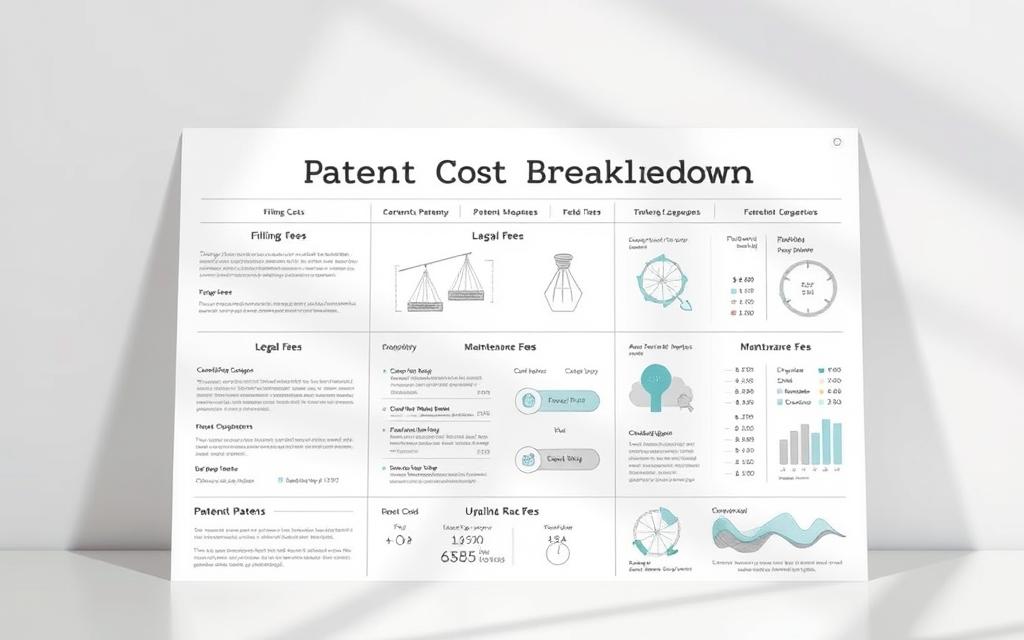
Application Fees: Initial Investment
The cost to start protecting a patent can change a lot. Utility patents need more work and cost more than design patents.
| Patent Type | Average Application Cost | Complexity Level |
|---|---|---|
| Utility Patent | $5,000 – $15,000 | High |
| Design Patent | $1,000 – $3,500 | Low |
Maintenance Fees: Ongoing Expenses
The USPTO makes you pay fees to keep a utility patent alive. These fees are needed to keep the patent active. You have to pay three times: at 3.5, 7.5, and 11.5 years after you get it.
Legal Fees: Professional Support
You might need a lawyer to help with patents. Lawyers charge $200 to $400 an hour. The total cost can be $5,000 to $15,000, depending on how hard it is.
Inventors should plan their budget well. This way, they can protect their ideas with patent registration.
Differences in Patent Protection
Patent protection changes a lot for different types of intellectual property. It’s key for inventors and businesses to know the differences. This helps them get the best legal protection for their new ideas.
Patent protection has its own rules. These rules affect how well you can defend your invention and deal with infringement. Inventors need to understand these rules well to protect their ideas best.
Scope of Protection
Patent protection is different for utility and design patents:
- Utility patents give broader functional protection. They cover the technical parts and how an invention works.
- Design patents offer narrower aesthetic protection. They focus on how something looks.
- Utility patents last 20 years from when you file.
- Design patents last 15 years from when they are granted.
Infringement Issues
Infringement issues are different for each patent type:
- Utility patent infringement means proving someone used your invention without permission.
- Design patent infringement is about showing something looks too similar.
- You can get injunctions, money damages, or even have products destroyed as legal solutions.
Knowing the differences between patent types is very important. It helps inventors choose the right protection for their inventions. They need to think about what makes their invention special and what they want to achieve.
Enforcement of Patent Rights
Patent enforcement is key to protecting ideas in the United States. The rules for utility and design patents are different. This affects how inventors and businesses protect their work.

- Issuing cease and desist letters
- Conducting licensing negotiations
- Initiating legal litigation
- Seeking monetary damages
Utility Patent Enforcement
Utility patents protect how things work. If someone uses your invention without permission, you can sue. Utility patents last 20 years from when you file.
Design Patent Enforcement
Design patents protect how things look. Design patents last 15 years from when they’re granted. A 2008 change made it easier to prove design patent infringement.
There are big differences in enforcement:
- What’s protected is different for utility and design patents
- How damages are figured out varies
- What counts as infringement is unique
About 90% of patent applications are for utility patents. Knowing how to enforce patents is vital for protecting your ideas.
Challenges in Obtaining Patents
Getting a patent can be hard for inventors. It’s important to know how to choose the right patent type for their ideas.
Inventors face big challenges when picking a patent. These challenges can affect their plans for protecting their ideas.
Utility Patent Challenges
Applicants for utility patents meet many obstacles:
- They must show their invention is new
- They need to prove it’s not obvious to others in the field
- They have to deal with rejections based on what’s already known
- They must give detailed technical information
Design Patent Challenges
Design patent applications have their own problems:
- They must prove the design is unique
- They face a test that’s hard to pass
- They have to tell apart what looks good from what works
- They deal with tricky visual standards
The USPTO checks patent applications closely. Inventors need to document their ideas well. They also need to know the specific rules for each patent type.
To beat these challenges, inventors need a good plan. They should do lots of research. Sometimes, they need help from lawyers to get their patent.
Patent Research: Why It Matters
Protecting inventions with patents starts with good research. Inventors must understand patent rules to make their ideas stand out.
Doing a deep patent search is key for inventors. It shows them what’s already out there and what’s new about their ideas.
Essential Steps in Patent Research
- Use official patent databases like USPTO
- Look at international patent sites
- Do detailed keyword searches
- Study patents in similar fields
Strategic Benefits of Patent Research
Patent research helps inventors in many ways:
- Novelty Assessment: Check if your idea is new
- Competitive Intelligence: See what’s happening in the market
- Risk Mitigation: Stay away from legal trouble
- Strategic Planning: Find ways to make money from your idea
The USPTO gets over 500,000 patent apps every year. About 300,000 patents are granted. With so many, doing good research is very important.
Professional Search Strategies
While you can search on your own, experts can help a lot. They know how to find things you might miss.
Licensing and Litigation
Patent licensing and litigation are key parts of managing intellectual property. They let inventors make money from their ideas and keep their rights safe from others.
Patent owners can share their ideas through licensing deals. The cost of patents affects how much money they can make from new inventions.
Licensing Utility Patents
Utility patent licensing lets others use inventions that work. Important things to think about include:
- Negotiating royalty structures
- Defining exclusive or non-exclusive usage terms
- Establishing clear performance metrics
Licensing Design Patents
Design patent licensing protects unique looks. The types of patent infringement are different for utility and design patents.
| Patent Type | Licensing Focus | Key Considerations |
|---|---|---|
| Utility Patents | Functional Innovation | Technical Performance |
| Design Patents | Visual Appearance | Aesthetic Uniqueness |
Patent Litigation Process
The patent litigation process is complex. It involves legal steps to protect intellectual property rights.
- Initial legal assessment
- Filing formal complaint
- Discovery phase
- Potential settlement or court resolution
Knowing about patent licensing and litigation helps inventors. It helps them protect their ideas and make money.
Conclusion: Choosing the Right Patent Type
When you want to protect your invention, you need to pick the right patent. This choice is key to keeping your idea safe. It depends on if your invention works well or looks special.
Utility patents protect inventions that work well for 20 years. Design patents guard unique looks for 15 years. They cost less, at $650 for small businesses, and don’t need extra fees.
Deciding between these patents depends on what matters most to you. Is it how well it works or how it looks?
Before making a choice, do your homework. Talk to experts in intellectual property. Think about how much money it could make and how it fits in the market.
The USPTO has many patent options. This means you can find the best one for your invention. This choice is important for keeping your idea safe and making money.
Knowing the differences between patents helps you make smart choices. This can protect your invention and help it succeed. Whether it’s a new machine or a unique design, the right patent is key.